
AFIR 2026: The Guide to EV Charging Infrastructure for CPOs
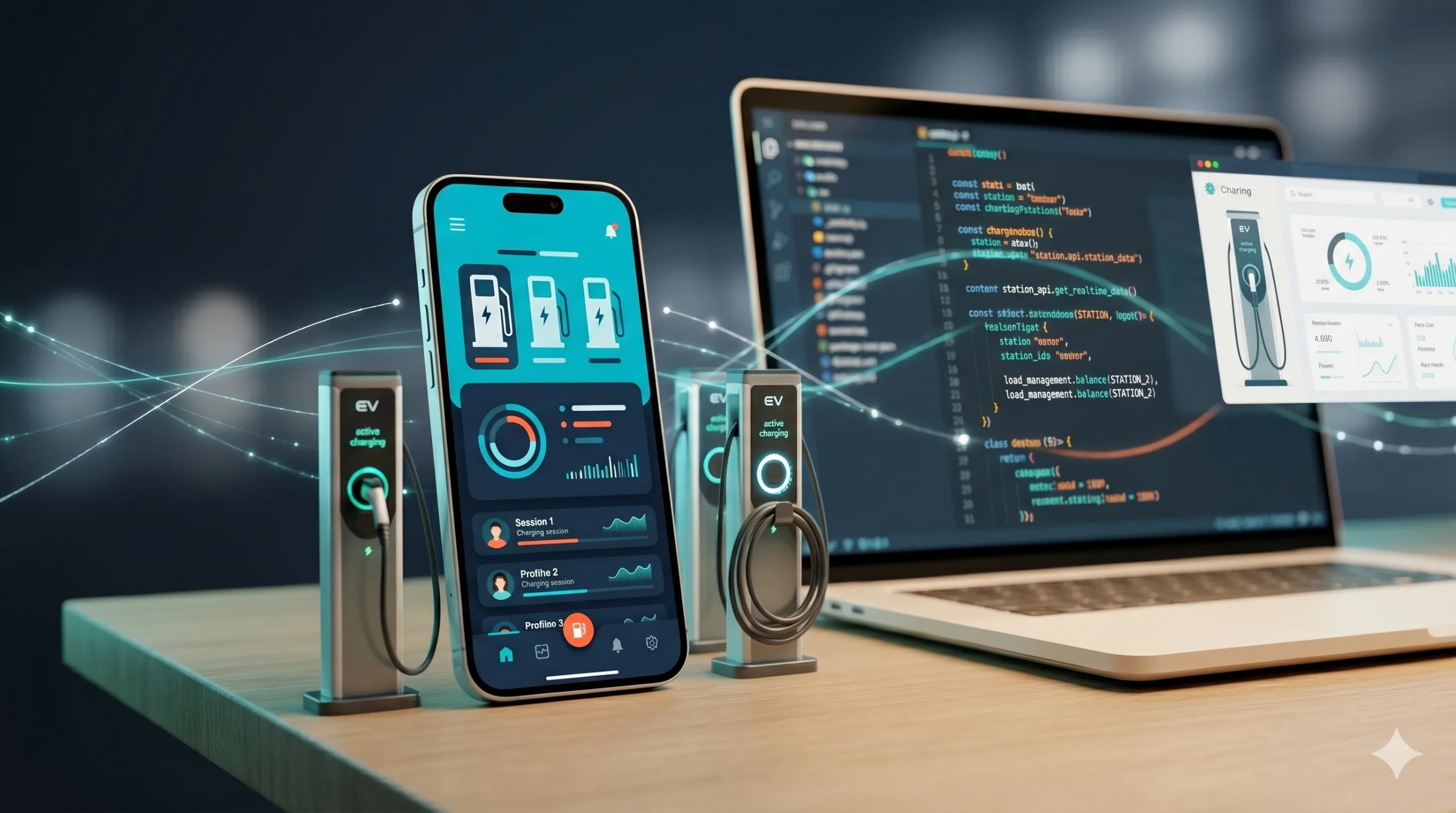 AI generated
 Electric mobility in Europe is at a turning point. The number of EVs on the road is climbing fast, yet the charging experience often remains fragmented and unnecessarily complicated. To put an end to this patchwork and create a seamless, user-friendly charging experience across the entire EU, the „Alternative Fuels Infrastructure Regulation“ — AFIR for short — has entered the picture. The first deadlines already took effect in 2024, but AFIR 2026 marks a decisive milestone that presents charge point operators (CPOs) and the wider industry with a new set of challenges and opportunities. This guide walks through the aspects that matter most in the run-up to 2026.
What is AFIR, and why is 2026 a pivotal year?
AFIR is an EU regulation that replaces the earlier AFID directive (Alternative Fuels Infrastructure Directive). The crucial difference: as a regulation, it applies directly in every EU member state and does not first have to be transposed into national law. That creates uniform standards from Portugal to Poland.
The overarching goal is to solve the „range anxiety“ problem and make charging an electric car as simple and transparent as filling up a combustion vehicle. The first rules on ad hoc payment at new charge points already came into force in April 2024, while the requirements tied to AFIR 2026 target the strategic, EU-wide build-out of infrastructure and its digital connectivity. It is no longer about individual charge points, but about an intelligent, Europe-wide network.
The core AFIR 2026 requirements in detail
The regulation is far-reaching and touches almost every aspect of running charging infrastructure. For CPOs, the following four areas are the ones that really count in the run-up to 2026.
1. Roll-out targets along the TEN-T network
A centrepiece of AFIR is the set of binding roll-out targets along the Trans-European Transport Network (TEN-T). The EU wants to make sure that long-distance travel in an electric car is genuinely hassle-free.
- Charging power: By the end of 2025, charging pools for passenger cars with a total output of at least 400 kW must be installed every 60 km along the TEN-T core network, with at least one charge point delivering 150 kW. By 2027, that requirement rises to 600 kW.
- Coverage: By 2026 and beyond, the build-out extends to the entire TEN-T network, so that more remote regions are fully connected as well.
- Truck charging infrastructure: There are ambitious targets for heavy commercial vehicles too, to be implemented in stages from 2025 onwards, which adds another layer of complexity to site planning.
Important: These roll-out targets call for more than heavy investment in hardware. They also require intelligent site selection, sufficient grid connection capacity and a robust management backend to keep availability across charging pools consistently high.
2. Standardised payment options and ad hoc charging
The change end users will notice most is the simplified payment process. The era of countless charging cards and apps is meant to be over.
At every publicly accessible charge point commissioned after 13 April 2024, spontaneous charging (ad hoc charging) must be possible without a contract. For DC fast chargers rated at 50 kW or more, this means a card reader for common debit and credit cards, or a contactless payment function, is mandatory. For AC charge points below 50 kW, a dynamic QR code solution leading to a web-based payment page is sufficient.
Implementing secure, user-friendly web payment flows is anything but trivial. It calls for expertise in web development, payment gateway integration and cybersecurity. This is where specialised partners such as SB-Techworks can make a decisive difference.
3. Full price transparency before charging starts
AFIR puts an end to opaque pricing models. Charge point operators must display every price component clearly and comprehensibly before the charging session begins. This can happen directly on the charger’s display or via an electronic display.
The following pricing models are permitted:
- Price per kilowatt hour (kWh)
- Price per minute
- Price per charging session (session fee)
Combinations are allowed, but the price per kWh must always be shown prominently. This strengthens consumer trust and makes genuine price comparison between providers possible.
4. Digital connectivity and data provision
An often underestimated but technically demanding part of AFIR 2026 concerns data availability. CPOs are required to make comprehensive data about their charge points available electronically and free of charge, so that it can be integrated into navigation systems, third-party apps and roaming platforms.
- Static data: Precise geolocation, number of charge points, connector types, maximum charging power, operator information.
- Dynamic data: Operational status (available, occupied, out of service), current ad hoc prices and availability (for example whether a reservation is possible).
This data has to be exposed through standardised interfaces (APIs) to guarantee interoperability. Protocols such as OCPI (Open Charge Point Interface) are becoming the de facto standard here.
Technical and operational challenges for CPOs
Meeting the AFIR requirements is more than a compliance exercise. It confronts CPOs with substantial challenges:
- Hardware investment: Large-scale roll-out and the possible retrofitting of payment terminals require significant capital.
- Software development: Existing charge point management systems (CPMS) have to be adapted or rebuilt to handle price transparency, data provision via API and the administration of complex payment flows.
- Interoperability and roaming: Connecting to national access points (e-mobility access points, EMAPs) and ensuring compatibility with the various roaming platforms is complex.
- Cybersecurity: As connectivity increases and payment systems are integrated, the risk of cyber attacks grows with it. Protecting customer data and critical infrastructure is the top priority.
- Operations and maintenance: High charge point availability is a legal requirement. That calls for efficient monitoring, maintenance and support processes.
How SB-Techworks can help you prepare for AFIR 2026
The physical build-out of charge points is one side of the coin; the digital infrastructure behind it is the other. That is exactly where SB-Techworks comes in as a specialist in custom software and app development, helping CPOs and e-mobility service providers not just to meet the digital demands of AFIR 2026, but to turn them into an advantage.
Services include:
- CPMS backend development: Tailor-made management systems, designed and built to be scalable, secure and AFIR-compliant.
- Payment implementation: From integrating payment terminals through to building seamless web-based QR code payment journeys.
- API development and integration: Building the OCPI interfaces you need to expose your data to third parties and enable roaming.
- User-centred mobile apps: Apps that go well beyond the baseline requirements, using features such as reservations, charging history and personalised offers to create an excellent user experience and keep customers coming back.
Conclusion: AFIR 2026 as a catalyst for innovation
AFIR 2026 is far more than a regulatory hurdle. It is a powerful push towards standardisation and professionalisation in the European e-mobility market. In the short term it means investment and adaptation for CPOs, but in the long term it is an enormous opportunity. Those who invest now in a modern, open and user-friendly digital infrastructure will come out ahead as competition intensifies.
The regulation creates a level playing field and encourages innovation that ultimately benefits drivers. A simple, transparent and reliable charging experience is the key to mass adoption of electric mobility. If you are ready to shape your digital strategy for the future of e-mobility, get in touch. SB-Techworks can help you turn the AFIR 2026 requirements into a lasting competitive advantage.
Frequently asked questions about AFIR 2026
Do I have to retrofit my existing charge points with card readers by 2026?
No, the regulation does not impose a general retrofitting obligation on charge points that are already installed. The requirement to fit card readers (for DC chargers above 50 kW) applies to all charge points newly commissioned after 13 April 2024. Retrofitting voluntarily can nevertheless improve usability and make your site considerably more attractive.
What exactly does „ad hoc charging“ mean under AFIR?
Ad hoc charging means a charging session must be possible without a contract, membership or registration agreed with the operator in advance. Payment must be possible spontaneously with a common payment instrument such as a debit or credit card, or through a web-based solution.
Which data do I have to make publicly and digitally available as a CPO?
You have to provide both static and dynamic data. Static data covers the exact location, the number and type of connectors and the maximum charging power. Dynamic data, which must be updated in real time, covers the occupancy status (available, occupied, faulty) and the ad hoc price per kWh currently in effect.